


 Gamespagina
Geospatial Technologies Power Smarter Decisions Across Infrastructure Climate And Commerce
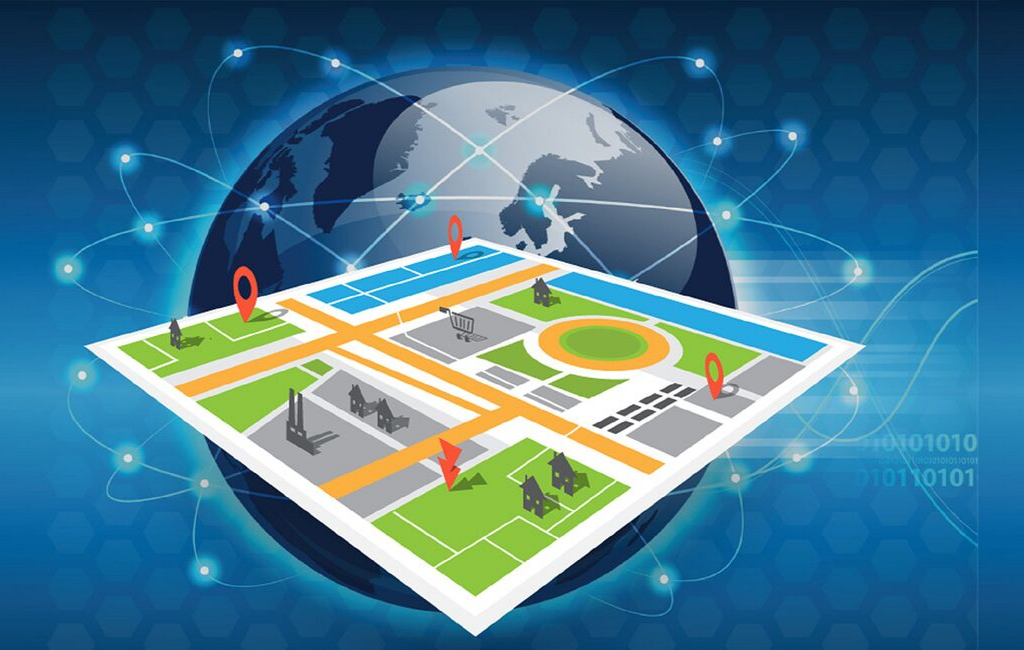
The Geospatial market is expanding as organizations rely on location intelligence to plan, build, and operate complex systems. Geospatial data—from satellites, drones, mobile devices, and sensors—helps convert “where” into operational insight. Governments use geospatial tools for urban planning, emergency response, and land administration. Utilities and telecom providers apply mapping and network models to optimize assets and maintenance. Businesses use location analytics for site selection, delivery routing, and customer segmentation. Climate risk and resilience planning are also major drivers, with organizations assessing flood exposure, wildfire risk, and coastal change. The market is shifting from static maps to dynamic spatial analytics, integrating real-time feeds and predictive models. As digital twins and smart city initiatives grow, geospatial becomes a foundational data layer. Adoption increases when organizations can unify spatial data with business systems, enabling faster decisions and measurable outcomes.
Key technologies include GIS software, remote sensing, photogrammetry, LiDAR, and geocoding services. GIS platforms allow users to visualize, analyze, and share spatial data with role-based workflows. Remote sensing provides broad coverage through satellites, enabling monitoring of vegetation, land use, and infrastructure change. Drones and aerial imaging deliver high-resolution, on-demand data for inspections and surveying. LiDAR supports 3D mapping and precise elevation models used in construction, forestry, and flood modeling. Geospatial analytics increasingly incorporates machine learning to automate feature extraction—such as roads, buildings, or crop boundaries—from imagery. Integration with IoT and telemetry adds real-time context, such as vehicle locations, asset health, or environmental sensors. However, data quality and governance remain essential: spatial datasets must be accurate, updated, and aligned to consistent coordinate systems. Organizations also need skilled analysts or simplified tools that make spatial insights accessible to non-specialist users.
Commercial adoption is accelerating through cloud delivery and APIs. Many organizations now consume basemaps, imagery, and geocoding as services rather than managing all datasets internally. Cloud-native architectures enable large-scale processing of imagery and LiDAR, supporting faster analytics and collaboration. APIs allow developers to embed maps and location intelligence into business applications, improving workflow integration. Another trend is the convergence of BIM, CAD, and GIS for infrastructure and construction projects. This allows teams to connect design models with real-world geography, improving planning and lifecycle asset management. Security and privacy are increasingly important, particularly when using mobile location data or critical infrastructure mapping. Role-based access, data masking, and compliance controls help manage risk. As geospatial becomes embedded in more decision processes, organizations demand reliable governance, documentation, and auditability of spatial data sources and transformations.
The future of geospatial is increasingly real-time, 3D, and predictive. Digital twin initiatives will rely on continuous spatial updates from sensors, imagery, and operational systems. AI will automate more mapping tasks and reduce time from data capture to actionable insight. Location intelligence will also become more democratized through self-service dashboards and simplified analytics tools. Organizations evaluating geospatial investments should focus on business outcomes: reduced downtime, better capital planning, improved safety, or faster response times. They should also build a data foundation with clear standards for accuracy, update frequency, and metadata. Partner selection should consider data coverage, platform interoperability, and support for integration into enterprise workflows. With climate pressures, infrastructure modernization, and logistics growth, geospatial capabilities are becoming essential for resilient operations and competitive advantage across public and private sectors worldwide.
Top Trending Reports:
 Dutch
Dutch
 English
 Arabic
 French
 Spanish
 Portuguese
 Deutsch
 Turkish
 Italiano
 Russian
 Romaian
 Portuguese (Brazil)
 Greek
Greek