


 Gamespagina
How Zjdfjx Hydraulic Press Factory Integrates Innovation into Production?
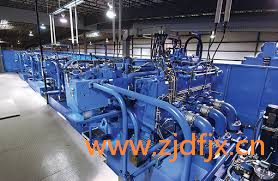
Manufacturing industries increasingly require equipment that can adapt to specific production needs. As projects diversify and customer expectations rise, conventional methods often struggle to maintain efficiency while addressing unique requirements. Hydraulic press systems have emerged as essential tools for achieving precision, consistency, and flexibility in shaping, forming, and structural processing. But how can a Hydraulic Press Factory ensure these systems meet the diverse and specialized needs of modern industries?
The ability to provide tailored solutions begins with design versatility. A well-equipped Hydraulic Press Factory can adjust system parameters, including pressure, stroke, and tooling configurations, to suit a variety of materials and production scales. By incorporating flexible components and intelligent control interfaces, manufacturers gain the capacity to execute complex tasks without compromising efficiency or safety. This adaptability proves critical for companies seeking to differentiate their products while maintaining consistent output quality.
Zjdfjx exemplifies how a Hydraulic Press Factory can integrate research-driven innovation with practical application. By developing equipment capable of handling custom requirements, the company allows manufacturers to pursue specialized projects that would otherwise demand separate machinery or manual adjustments. This approach reduces downtime, optimizes workflow, and ensures that production remains responsive to market trends.
Customization also extends to tooling and mold design. Press equipment designed with adjustable dies and adaptable plates allows for rapid configuration changes, facilitating the production of components with varying shapes, dimensions, and surface finishes. Industries such as automotive, construction, appliance manufacturing, and metalworking all benefit from this versatility, as it enables consistent performance across different applications while supporting unique design specifications.
In addition to mechanical adaptability, software and monitoring systems play a crucial role. Intelligent control systems allow operators to program specific operations, track real-time performance, and adjust parameters on the fly. This not only ensures quality control but also supports repeatable processes that can be scaled according to project requirements. By combining mechanical flexibility with digital intelligence, manufacturers can produce custom solutions without sacrificing efficiency or safety.
A Hydraulic Press Factory that embraces customization also considers operational support. Maintenance, training, and technical consultation services ensure that machinery performs at peak efficiency, even when handling specialized projects. Zjdfjx, for example, emphasizes customer support as an integral component of its offerings, enabling clients to adapt equipment for multiple applications while minimizing operational interruptions.
Material handling and press capacity are equally important. Different industries use a wide range of metals, composites, and alloys, each with unique requirements for pressure, speed, and temperature control. Flexible press systems can accommodate these variations, allowing manufacturers to pursue high-precision results for diverse products, from structural components to decorative panels, without additional equipment investments.
Flexibility in production also translates to economic benefits. By enabling multiple applications within a single system, manufacturers reduce capital expenditure and optimize floor space. Additionally, the ability to respond quickly to changing production demands helps companies maintain competitiveness and satisfy client requirements with agility. In sectors where project timelines are critical, these advantages directly influence operational success and market responsiveness.
Integration with automated or semi-automated production lines further enhances the value of customizable press machinery. By connecting presses to upstream and downstream processes, manufacturers can maintain continuous workflow, minimize errors, and reduce manual labor. The combination of adaptive machinery and streamlined production processes ensures that each product meets exact specifications, even under demanding conditions.
For industrial enterprises seeking comprehensive solutions for tailored manufacturing, exploring https://www.zjdfjx.cn/product/hydraulic-press-machinery/ reveals how advanced press systems provide precision, flexibility, and operational reliability, allowing manufacturers to achieve unique production goals efficiently while adapting to evolving industrial demands.

 English
 Arabic
 French
 Spanish
 Portuguese
 Turkish
 Dutch
 Italiano
 Russian
 Romaian
 Portuguese (Brazil)
 Greek