
 Gamespagina
Kings of the Hill: Analyzing Online Strategy Games Market Share
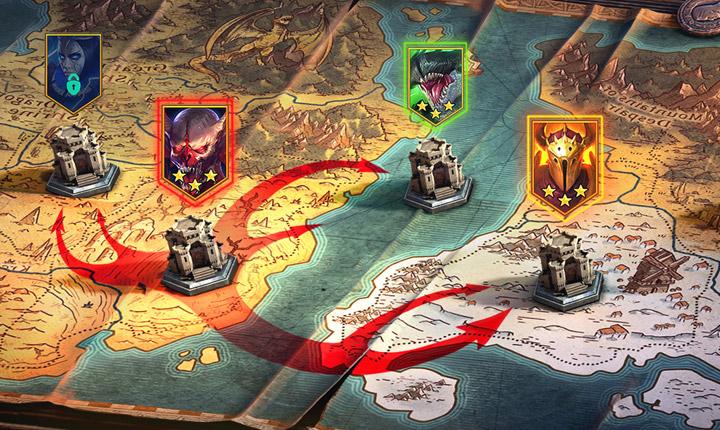
In a gaming market characterized by deep player investment and fierce competition, the distribution of market share is a tale of dominant dynasties and powerful regional kingdoms. Within the intellectually demanding world of online strategy, the battle for Online Strategy Games Market Share is a long-term war for player loyalty. The market’s projected growth to USD 53.32 billion by 2035, expanding at a solid 8.72% CAGR, ensures that the stakes in this battle are incredibly high. Market share in this genre is often concentrated around a few key titles that achieve a critical mass of players and become cultural phenomena, creating powerful moats that are difficult for new challengers to breach.
In the massive Multiplayer Online Battle Arena (MOBA) segment, market share is a clear duopoly. Riot Games' League of Legends and Valve's Dota 2 have dominated this space for over a decade. League of Legends, owned by the Chinese tech giant Tencent, holds the larger share of the global player base and has built a massive, franchised esports ecosystem. Dota 2 has a smaller but incredibly dedicated following and is famous for "The International," its annual tournament with a community-funded prize pool that often reaches tens of millions of dollars. These two games have such a strong grip on the market that new entrants have found it almost impossible to gain a significant foothold.
The market share in the mobile strategy space is more fragmented but is also dominated by a few major players. Supercell, a Finnish company also owned by Tencent, has a massive market share with its iconic title Clash of Clans, which has been a top-grossing app for a decade. Companies like IGG with Lords Mobile and Lilith Games with Rise of Kingdoms have also captured a huge share of the "4X" (eXplore, eXpand, eXploit, eXterminate) mobile strategy market. These companies are masters of the free-to-play model, with sophisticated user acquisition strategies and live operations teams dedicated to maximizing player retention and monetization.
In the more traditional PC strategy space (RTS and Turn-Based), market share is often held by specialized publishers with a portfolio of beloved franchises. Paradox Interactive is a dominant force in the grand strategy genre, with a huge and loyal following for its complex historical simulations like Europa Universalis and Crusader Kings. SEGA, through its ownership of Creative Assembly, commands the historical RTS market with the long-running and highly successful Total War series. These companies have built their market share not by chasing the latest trends but by catering to a specific, dedicated audience with deep and complex gameplay that no one else provides.
Explore More Like This in Our Regional Reports:
GCC Marketing Cloud Platform Market

 Arabic
 French
 Spanish
 Portuguese
 Deutsch
 Turkish
 Dutch
Dutch
 Italiano
 Russian
 Romaian
 Portuguese (Brazil)
 Greek
Greek